
Selling a Home in Los Angeles or Palm Springs? Think Like a Buyer.

HEADLINE: Selling a Home in Los Angeles or Palm Springs? Think Like a Buyer.
Pricing, staging, and seller strategy across Los Angeles and Riverside counties | November 2026
Want to catch a buyer? Think like a buyer.
Before you list your home, look at it through the eyes of someone deciding whether to spend their money.
They're calculating the payment, comparing properties, and figuring out how much work comes with the keys.
My advice? Give them more reasons to say yes.
For sellers in Los Angeles, West Hollywood, Palm Springs, and Rancho Mirage, my strategy starts with thoughtful pricing, staging, sensible repairs, upfront disclosures, and a willingness to consider concessions. Make those decisions before the sign goes up.
What's happening in Los Angeles and Riverside counties?
September 2026 data from the California Association of REALTORS® shows fewer completed single-family home sales in both counties compared with a year earlier.
Los Angeles County's median selling time was slightly shorter than a year earlier, while Riverside County's increased from 38 to 42 days. These figures cover existing single-family homes. Fewer sales don't mean every neighborhood is seeing falling prices or longer selling times.
The desert deserves its own conversation. Greater Palm Springs REALTORS® reported a September median detached-home price of $624,000 for the Coachella Valley, down just 0.3% from a year earlier. Median market time was 57 days, three days shorter than the previous year. However, the three-month average sales pace declined to 483 homes per month from 543. The desert report covers a different geography and uses different measures from the county report.
From Hollywood to Rancho Mirage, compare yourself to your actual competition.
A condo in Downtown Los Angeles or West Hollywood needs its own comparison set. So does a house in Sherman Oaks, Van Nuys, or Panorama City.
In Riverside County, give a Palm Springs condo, a Cathedral City home, and a property in a Rancho Mirage 55-plus community separate analyses. Apply that same discipline in Palm Desert, La Quinta, and Indio.
My approach is to compare your property with the alternatives its likely buyers are considering. Review location, condition, property type, monthly ownership costs, and competing inventory.
County statistics provide context. Your sales strategy needs to get much closer to home.
Buyers already have a payment to think about. Don't hand them a project list, too.
Walk through your home as if you were seeing it for the first time.
What would make you hesitate? What would you want repaired? What would you ask the seller to explain?
That’s where I recommend starting.
Address maintenance items that make financial sense. Consider appropriate inspections and get estimates for larger concerns. Decide what to repair and how to account for remaining issues in your price, disclosures, and negotiations.
You don’t need to renovate everything. You do need a plan for the condition you’re offering.
Stage the home so buyers understand it.
As a broker and staging professional, I want the presentation to answer practical questions: Where does the dining table go? How does this oversized great room work? Is there room to entertain outside?
Give each space a purpose. Edit furniture, improve lighting, and make the outdoor areas part of the presentation. Then use photography that clearly shows what the home offers.
My recommendation is to budget for staging and preparation at the beginning. Compare that investment with your carrying costs and the financial effect of a possible price reduction.
Staging cannot guarantee a particular price or selling time. It deserves consideration as part of a deliberate marketing plan
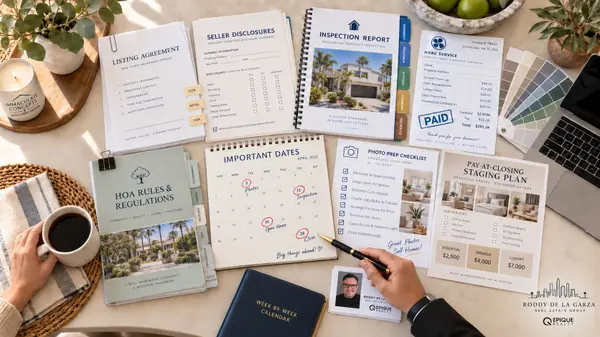
Disclose upfront. Get the paperwork ready.
Think like a buyer: What would you want to know before committing your money?
Prepare disclosures and gather available inspection reports, repair invoices, permits, warranties, and HOA documents early. Work with your agent and appropriate professionals to identify questions that need further investigation.
For condos, I recommend particular attention to association finances, insurance, assessments, and building-condition records. For income properties, organize leases, expenses, and documentation supporting the income and improvements being advertised.
Treat advance preparation as part of your sales strategy while meeting all applicable disclosure requirements.
Price for the homes buyers can choose today.
Before settling on an asking price, ask yourself:
“If a buyer tours our home and three others this weekend, why would they choose ours?”
Build your answer around location, condition, presentation, price, and terms.
Review recent comparable sales alongside active competition and pending listings. An ambitious price needs a convincing case.
Set a schedule with your agent to review showings, feedback, and competing properties. Make adjustments based on evidence.
Be prepared to offer concessions.
My advice to sellers is to enter the market ready to evaluate closing-cost assistance, repair credits, or a mortgage-rate buydown when appropriate.
A concession request deserves a calculation.
Compare the complete offer with your expected net proceeds, another month of ownership, and the cost of continuing to market the property. Have the buyer’s lender confirm which financing concessions are permitted.
Price matters. So do financing, contingencies, timing, and the buyer’s ability to close.
Don’t let winning one negotiating point distract you from accomplishing the sale.
Buyers: make the payment work before you make the offer.
Start with a comfortable ownership budget that includes taxes, insurance, HOA dues, maintenance, and any applicable assessments or land-lease payments.
Then evaluate each property individually. Ask your agent whether its condition, market time, and competing listings support a lower offer or seller assistance.
Have your lender compare the effect of a price reduction with a closing-cost credit or rate buydown. Make the purchase affordable at today’s payment, without depending on a future refinance.
Give buyers a reason to choose your home.
My recommendation to sellers is straightforward: prepare to do more upfront.
Stage thoughtfully. Address repairs. Organize disclosures. Price with evidence. Leave room for a sensible negotiation.
Whether you're selling a longtime home in Los Angeles, coordinating a trust sale in Palm Springs, downsizing in Rancho Mirage, or repositioning an investment in the San Fernando Valley, let’s look at the property through a buyer’s eyes and build your plan from there.
Roddy de la Garza, GRI / SRES
Broker Associate | Team & Area Leader
Roddy de la Garza Real Estate Group | Epique Realty
1.888.RODDY.RE | roddydelagarza.com
Categories
Recent Posts







GET MORE INFORMATION

Roddy de la Garza
Broker Associate / Area Leader License ID: CA 01995374 / TX 431113